Overview

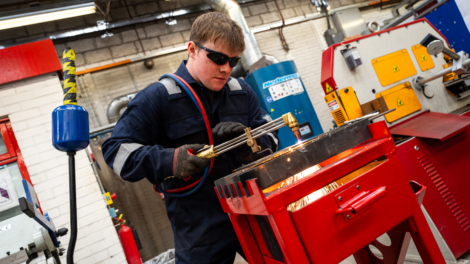
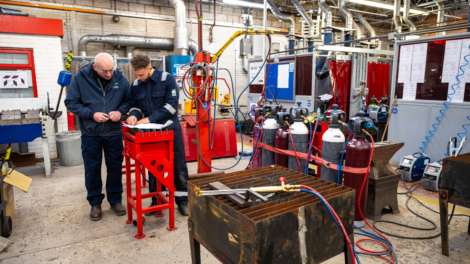
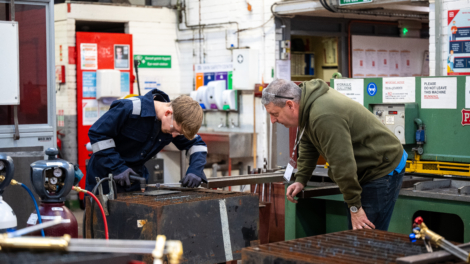
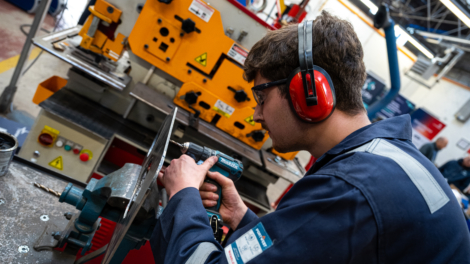
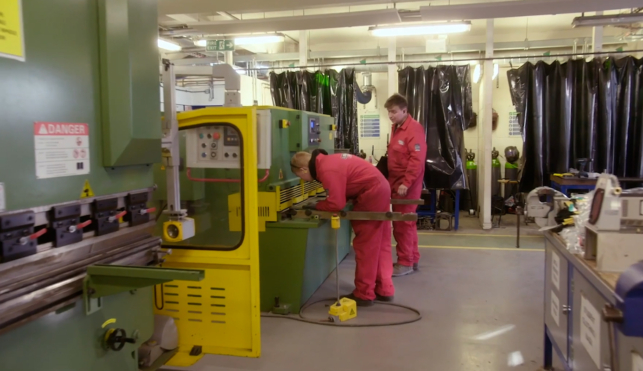
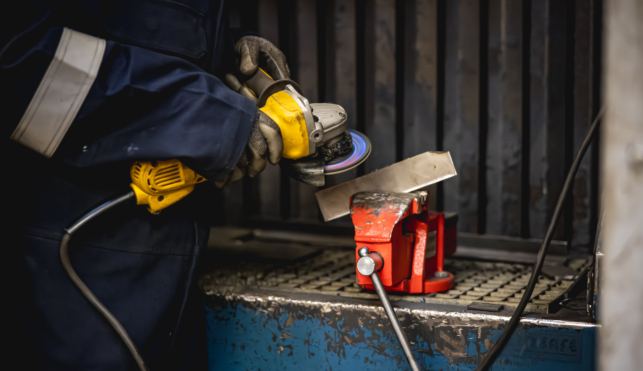
Metal fabrication is a large part of the UK engineering industry, it covers a wide range of fabrication and welding skills in heavy plate, structural steel, the manufacture of machines, for all types of production lines, construction machines and equipment, to fine tolerance sheet metal for the aircraft industry, in ferrous and non-ferrous materials.

There are several different avenues to begin a career in fabrication and welding, one option is, while you are still at school complete an engineering vocational BTEC course.

Or at 16 leave school and enrol on a fabrication and welding T level course, at a further education college or independent training provider, this route requires a work placement in industry, which potentially could lead to a fabrication and welding apprenticeship.


The skills you need to demonstrate

  • Reading fabrication drawings

  • Marking out

  • Thermal cutting accurately to varying tolerances

  • Forming, and shaping thick and thin ferrous or non-ferrous metallic materials

  • Assembling previously made parts, and welding using the MAG and TIG welding processes

Prepare for competition success

Our library of endorsed local skills competition briefs ‘benchmarking assessments’ helps prepare learners to build technical skills, productivity, and mindset competencies for national competition success, including employability progression pathways.

Paired with the benchmarking tracker, educators can record progress, identifying strengths and target areas for improvement. Together, they offer a reliable, standards-led framework, creating a sustainable model for skills development that supports educators to empower learners to be competition ready.
Entry criteria

  • To enter the Metal Fabricator Competition, the entrant needs to be on a qualification with a recognised awarding body, at a Further Education College or an independent training provider, or an apprentice employed in the Metal Fabrication industry.
  • Entrants from Scotland. Northern Ireland and Wales need to be enrolled on the equivalent courses in their appropriate devolved nations.
  • The competition is designed to be for entrants who have started their first year at level 3 in their chosen qualification or apprenticeship.
  • However competent entrants, who are in their second year at level 2, are encouraged to enter, for the value-added experience.
  • The competition is an individual event, each competitor will be working on their own, throughout the competition.
  • Competitors must be familiar with the core competencies (these can be found in the National Standard of Excellence in the ‘Useful resources’ section).

How it works

Registrations open on Monday 2 March 2026, 9am and will close Friday 27 March 2026, midnight.

Entry Stage will be released between Monday 3 March with a final deadline of 2 May, 2025 (Exact dates will vary by competition).

Qualifiers will take place between 5 May to 27 June, 2025 (Exact dates will vary by competition).

To help finalists prepare ahead of the UK Final, we will provide relevant technical training and share mindset development techniques, to support them to remain focused on achieving success.

Prepare students and apprentices by engaging with our benchmarking resources to master their skills and mindset masterclasses to build confidence and resilience on the WorldSkills UK Learning Lab.

The National Finals are scheduled to take place in Wales during the week commencing 16 November 2026.

Our gallery

Kickstart a career in Metal Fabrication

If you’re interested in Metal Fabrication then visit our Careers pages to learn more.

Construction Project Manager

Sign up to receive our latest updates to your email

Subscribe